Hamk University

Visited Hamk Univirsity in Finland.

Automation Lab

The Vietnamese student in Hamk University.

EMVITET Project

LHU join EMVITET Project.

Education 4.0

Organize Minirobocon Contest 2019 for Binh Phuoc province, Viet Nam

Solar Farm in Vietnam

The total installed capacity in Buon Ma Thuot solar farm is 30.7MW

Showing posts with label Reflections. Show all posts

Wednesday, April 28, 2021

Master teacher Training

 During two weeks (from Apr 1st to Apr 14th), 24 lecturers of FOP participated in MTT that was designed by BUILD-IT. This training provides lecturers with knowledge and skills about design lesson plans based on Bloom’ taxonomy, Kolb’s learning styles, critical thinking, the design thinking process and the flipped classrooms.
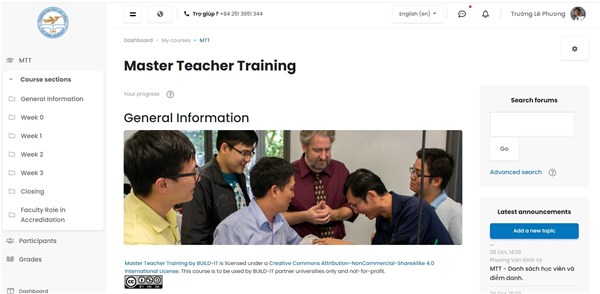
Combining online learning and face-to-face activities in MTT.
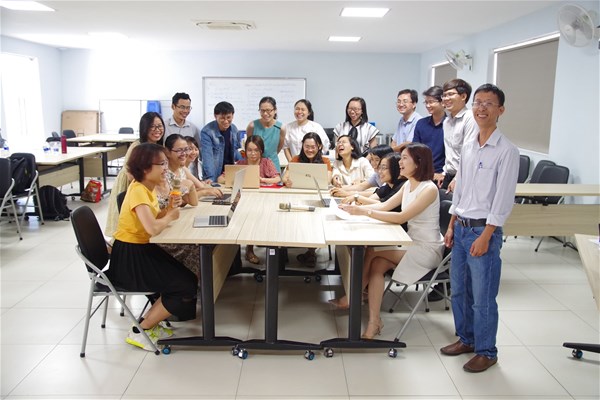
The facilitator - Mr. Truong (the one on the left) and MTT's participants - lecturers of FOP.

Throughout activities in this training, lecturers practised and planned on the schedules to improve their pedagogy methods. In addition, this training also gave a good opportunity for lecturers to share their personal experiences in applying the flipped classroom and ALAPA model, and discuss the current disadvantages when implementing the flipped classroom. Many lecturers suggested various solutions to resolve those difficulties.

Certainly, MTT brought many benefits to improving the quality of education at FOP.

Some activities in this training:
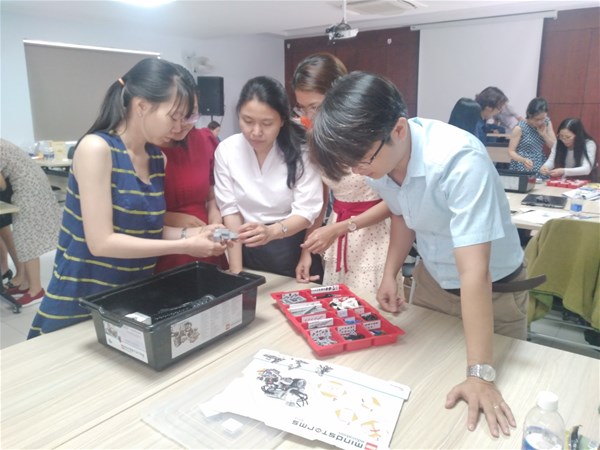
Practising the design thinking process
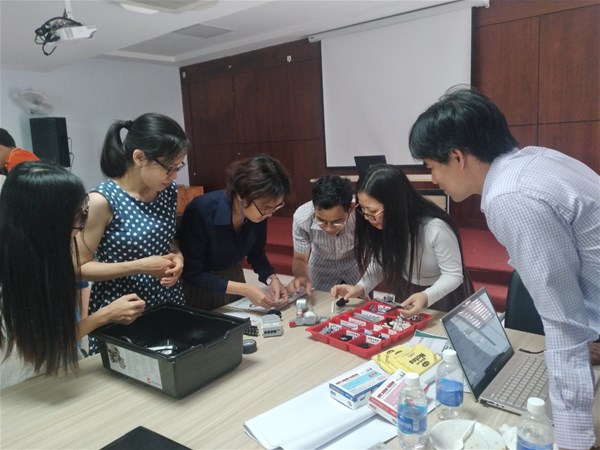
Practising the design thinking process
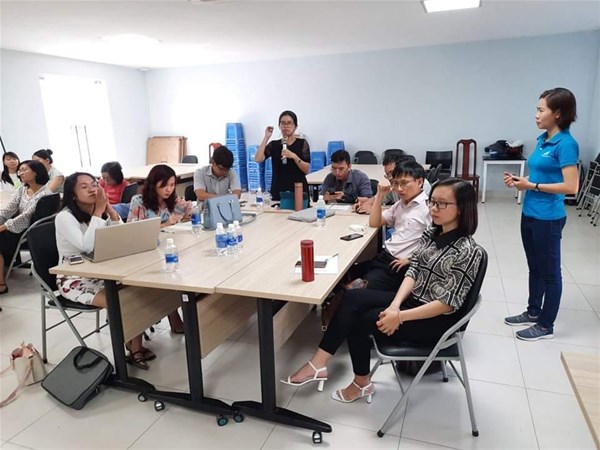
Mrs. Truc is sharing about her means to support students who have different Kolb's learning styles.
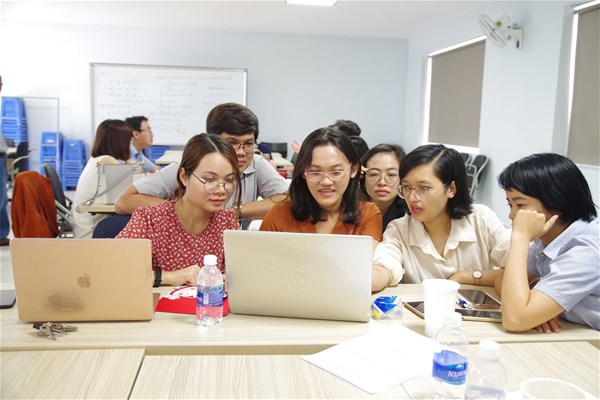
Designing lesson templete for the flipped classroom.
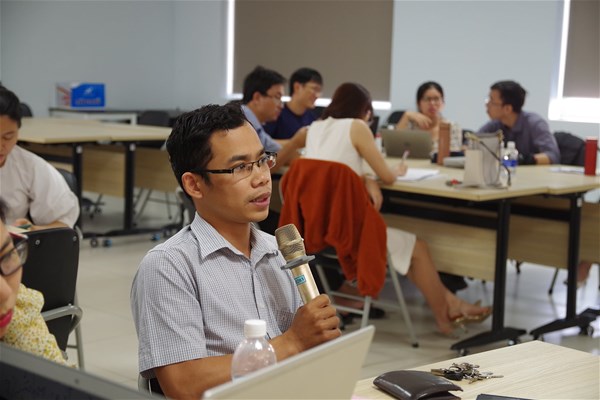
Mr. Cuong is shared his personal experiences when applying the flipped classroom.

Source: https://en-duoc.lhu.edu.vn/798/37646/Lecturers-of-FOP-participated-in-Master-Teaching-Training-MTT.html

Tuesday, April 20, 2021

Integrating digital pedagogy in teaching and learning activities towards education 4.0


ABSTRACT

The development of digital technology focus on teaching and learning activities has led to a change in learners' approach; therefore, teachers need to change the method which integrate digital tools based on the pedagogical perspective. This article presents a method of integrating digital pedagogy in teaching and learning activities towards education 4.0 for online teaching and learning in the form of distance learning and blended training methods. From this research results, the teacher sets up a teaching and learning plan that appropriately the teacher's training objectives and different training methods in either a face to face and/or digital environment.

link:

https://tapchigiaoduc.moet.gov.vn/vi/magazine/481-ki-i-thang-7/4-tich-hop-phuong-phap-su-pham-so-trong-hoat-dong-day-va-hoc-tien-den-nen-giao-duc-4-0-7574.html

INTERGRATING ONLINE ASSESSMENT INTO BLENDED TRAINING FORM: A CASE STUDY AT LAC HONG UNIVERSITY

 ABSTRACT

This paper presents a method to integrate online assessment into blended training form. Based on the Bloom Taxonomy, this study supports digital tools and methodology for assessment online based on the blended training form. Furthermore, ePortfolio has applied to assess the soft skill and knowledge during the time students study the course. From the results, this paper found the benefit of student and lecturer in teaching and learning activities based on the blended learning form including assessments online such as (1) the benefit and challenges of blended training method, (2) the benefits and challenges of online assessment (3) developing the assessment model for blended method, and (3 ) proposing suitable digital tools for assessment online.

Keywords: ePortfolio; assessment online; blended training form.


                                 Figure 1. The method for assessment online and digital tool

                                  Fig 2. The assessment model for Blended training form


    CONCLUSION

 This paper presents a method to integrate assessment online into a blended training method.  From the practical analysis, this study proposes a digital tool and method for assessment online-based lower order thinking and higher-order thinking. From practical perspectives, the research shows the following advantages: (1) the benefit and challenges of blended training method, (2) the benefit and challenges of online assessment (3) developing the assessment model for blended method, and (3) proposing suitable digital tools for assessment online. The results of this study may serve as the basis for other studies to integrate the digital pedagogy in Vietnam and this result proves that it is an example to expand the technology in educational development in Vietnam.


Saturday, April 25, 2020

Video meeting online tools

There are many support tools for distance learning. In this article, the author introduces some tools for online meetings.
1. Zoom 
Zoom is the digital tool based video communications, with an easy, reliable cloud platform for video and audio conferencing, collaboration, chat, and webinars across mobile devices, desktops, telephones, and room systems. Zoom has a security issue but I think zoom is going to solve this issue.
Fig1. Online meeting with Zoom software
link:
 https://zoom.us/
2. Webex

Cisco Webex is a solution for video conferencing, online meetings, screen share, and webinars. 
3. Skype Meeting
Skype Meeting is a free conference meetings with up to 50 people powered by Skype. No sign ups or downloads required, simply generate your unique link and share it with all.
4. Google meet
 Google meet has developed by Google. This tool not only makes a video meeting but also share your video, desktop, and presentation with teammates.
link:
https://meet.google.com/

In addition, to understand I  made a small comparison of the three  online meeting software shown in the table below:


Friday, April 24, 2020

Active model for online activities

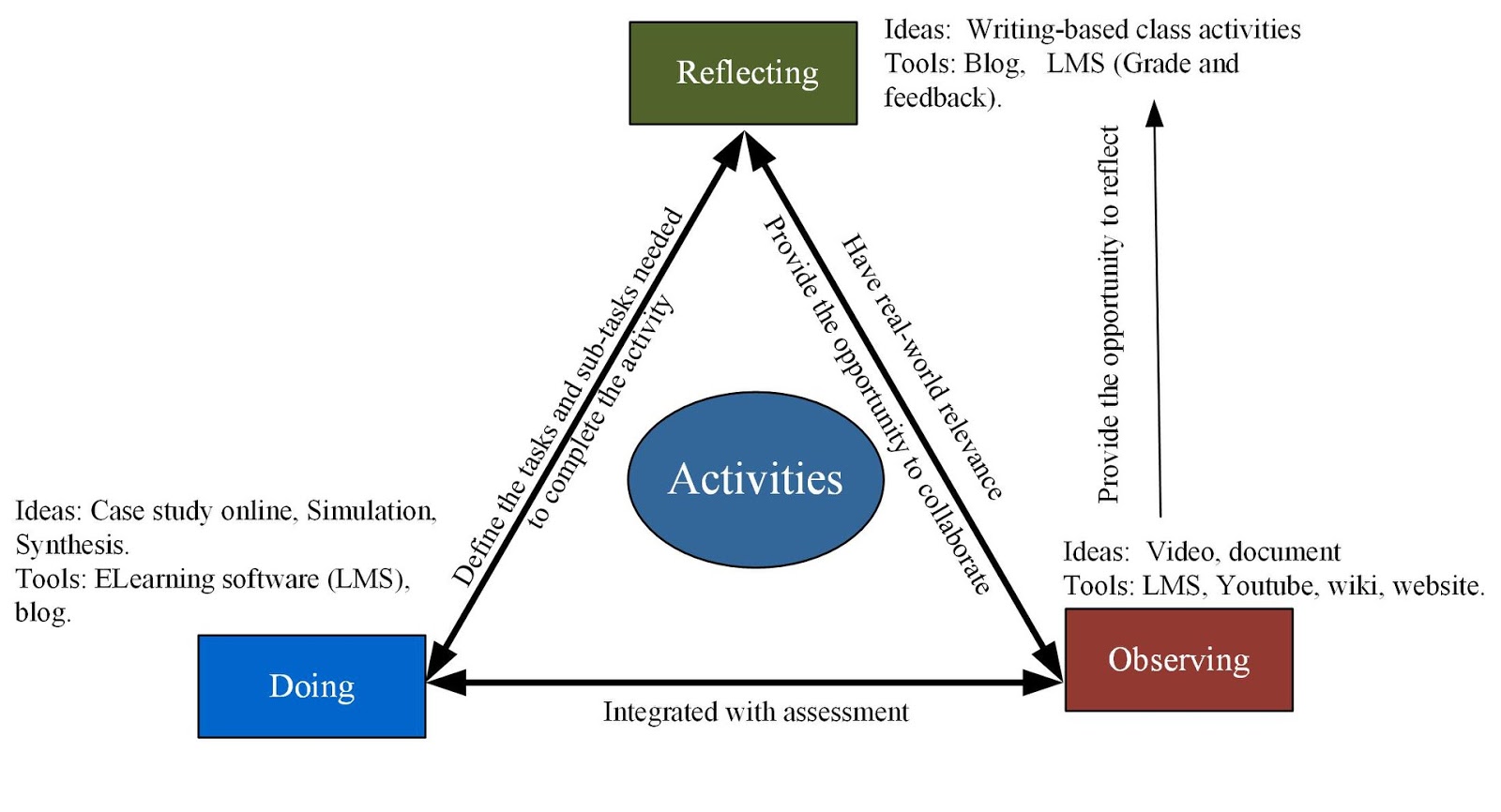
Students have a habit of completing assignments online instead of watching lectures and/or reading document. One of the solutions is to encourage students to complete lessons is to embed quiz scattered in videos or documents. In addition, from practical study at Lac Hong University proposed an active online model for teaching online as shown in Figure 1.
Accordingly  active model for online activities, the teachers need to bring up topics in the real world, build opportunities for cooperation and create feedback opportunities in a virtual environment for learners to respond to topics. However, in order to accomplish the activity, teachers need to build activities for learners through video, documents and / or websites. Practical activities in distance learning mode are very different from the bleded training mode. In order to implement hands-on activities, teachers need to build research topics based on online topics such as simulating  and synthesizing materials from which to write feedback on learners' practice  activities

Saturday, November 9, 2019

Digital Pedagogy

In recent year, We have heard a lot about education 4.0 so how to implement the education model 4.0. One of the new pedagogy is digital pedagogy. After discussing digital pedagogy we should be understood the Effectiveness of teaching and learning methods (Fig 1)
988f32166342ea12b010ee669aa6b78a.png
We must be thinking about this model and how to apply it to our class. Furthermore, the teacher creates a digital environment and posts the document, video or/and quizz. The student can study anywhere it makes the student free, it called flexible learning. In other hands, the teacher organizes dialog, through classroom dialog students understand each other better and learn from each other.
From the main point in this topic, digital pedagogy impact on teaching and learning. The teacher must study about technology and change teaching method, the student change method learning from negative to positive and free. I call Flexible teaching and learning

First week for education 4.0 project in Finland

Education 4.0 is an education that meets the human resource requirements of Industry 4.0, where human and technology are aligned to enable new possibilities [1].  So what is the pedagogy should be applied to solve this problem.
During one week in Hank University, my teacher (Irma, Sanna, Catja) gave me something new. Firstly, The important thing was the teacher understanding what was in mind of the student. I was amazed by the method Sana was applying, each person selects a picture that they like and shared their feelings about that picture. Through the short dialog, the lecture understands the feeling of student and change the method to approach the student. Secondly, I have learned the tool to support for teaching such as Moodle, Kahoot, Zoom.  Although I have applied these tools in teaching at LHU but I still learn many new things.  Finally, I visited another campus of Hamk university and I amazed about the curriculum-based module and the teacher will share with us next week. 
IMG_20190918_115844.jpg
Fig 1. The Vietnamese student in Hamk University
I and my team have a good time in Finland. The weather and food are the difference in Vietnam but it gives me a new experience.  My first impression about the environment in Finland was fresh air and lots of trees. We have a good trip on the weekend to Helsinki and Tallinn. It is nice and romantic.
71477755_10217139574413823_7592308955808792576_n.jpg
Fig 2. Tallinn old town

Fig 3. Hamk University
[1]Anealka Aziz Hussin,.Education 4.0 Made Simple: Ideas For Teaching, International Journal of Education & Literacy Studies.

Building eco system

Education 4.0 is becoming a trend to meet industry 4.0. Currently, there are many universities have been built the model towards education 4.0. In Hamk university has the model it called cschool that means "can do" school. It developed for Business faculty only. Based on this model I revised it for engineering faculty as Fig 1.
1.jpg
                                         Fig.1 The revision model-based cSchool model
Furthermore, education 4.0 needs teachers to change their teaching methods from traditional to student-centered. The teacher acquires new teaching technology. A big challenge is how to change the traditional teacher. Based on the research of Irma Kunnary I have been developed the model to motivate the traditional teacher to change their teaching method (Fig 2).
2.jpg
                       Fig 2. The changing traditional teacher model 
From this model, the support teacher developer team help the teacher improve their skill including the technology, teaching method skill. The teacher will be working in collaboration, interaction environment such as online sharing, discussion, dialogue. In this model, the teachers are motivated by giving them autonomy and value.
From two model as Fig 1 and Fig 2. I think I can do something new with my team when I back to our university.